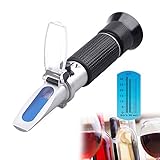
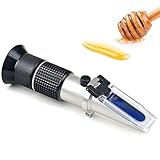
If you’re into home brewing, wine making, or even gardening, understanding the sugar content and specific gravity of your liquids is essential. A Brix refractometer is a handy tool that provides accurate measurements, allowing you to monitor fermentation and ensure the quality of your beverages. With its dual scale, it simplifies the process by offering readings for both Brix and specific gravity, making it a versatile addition to any homebrew kit or agricultural project.
In this article, we’ll take a closer look at one standout model of the Brix refractometer that not only boasts impressive accuracy but also features like automatic temperature compensation for even easier use. By the end, you’ll have a solid understanding of its benefits and why it could be the perfect fit for your brewing or gardening needs.

Key Features and Benefits
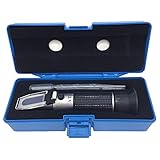
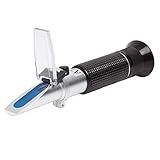
The Brix Refractometer with Automatic Temperature Compensation (ATC) is a specialized tool designed for measuring sugar content and specific gravity in liquids. This dual-scale device provides readings from 0-32% Brix and 1.000-1.120 Specific Gravity, making it suitable for various applications, including home brewing, wine making, agriculture, gardening, and educational purposes. One of its standout features is the Automatic Temperature Compensation, which ensures accurate results regardless of temperature variations. Additionally, the refractometer’s lightweight yet durable chromium construction makes it portable and easy to handle, enhancing user convenience.

Where to buy
- It's designed for testing the suger content and specific gravity of liquid.
- Ideal for Home Brew, Wine making, Agricultural, Gardening & Educational Purposes.
- Consistently accurate readings of 0-32% Brix and 1.000-1.120 Specific Gravity.

Pros and Cons
- Pros:
- Accurate and consistent readings.
- Automatic Temperature Compensation for reliable results.
- Lightweight and durable design for easy portability.
- Simple to use with only a few drops of liquid needed for testing.
- Cons:
- May show different results compared to traditional hydrometers, especially during fermentation.
- Focus adjustment is required on first use, which may slightly affect case fit.
Who Is This Product Recommended For?
This refractometer is ideal for home brewers, winemakers, and hobbyists who require precise measurements of sugar content and specific gravity. It is also beneficial for agricultural and gardening applications where monitoring liquid properties is essential. Additionally, educators can use this tool for teaching purposes in scientific experiments involving liquid analysis. Its ease of use and portability make it suitable for both beginners and experienced users in these fields.

Frequently Asked Questions
How accurate is the refractometer compared to a hydrometer?
The Brix refractometer provides accurate readings that can be comparable to those obtained from a hydrometer, especially when calibrated correctly. However, it is important to note that during fermentation, the presence of alcohol can influence the refractometer’s readings, leading to variations when compared to a floating hydrometer. Users should be aware of these potential discrepancies and understand how to adjust their readings accordingly.
Is it easy to clean and maintain?
Yes, the refractometer is designed for easy cleaning and maintenance. Users only need to apply a few drops of liquid for testing, and after each use, it can be wiped clean with a soft cloth. This straightforward maintenance process ensures that the device remains in good working condition without requiring complicated procedures or special cleaning agents.
What types of liquids can I test with this refractometer?
This refractometer is versatile and can be used to test a variety of liquids, including brewing wort, fruit juices, and other sugar-containing solutions. Its design specifically caters to applications in brewing and winemaking, but it can also be useful in agricultural contexts where liquid sugar content measurement is necessary.
Does the refractometer require batteries?
No, this refractometer operates without the need for batteries. Its design is entirely mechanical, which adds to its convenience and ease of use. Users can rely on this device anywhere without worrying about battery life or replacements, making it a practical choice for fieldwork and home use alike.